Hydro Jetting That Scours the Whole Pipe
Hydro jetting clears grease, roots, and scale out of drain and sewer lines with water at up to 4,000 PSI. We look with a camera first, jet the line clean, and show you the pipe again when we finish. You get the price before any work starts.
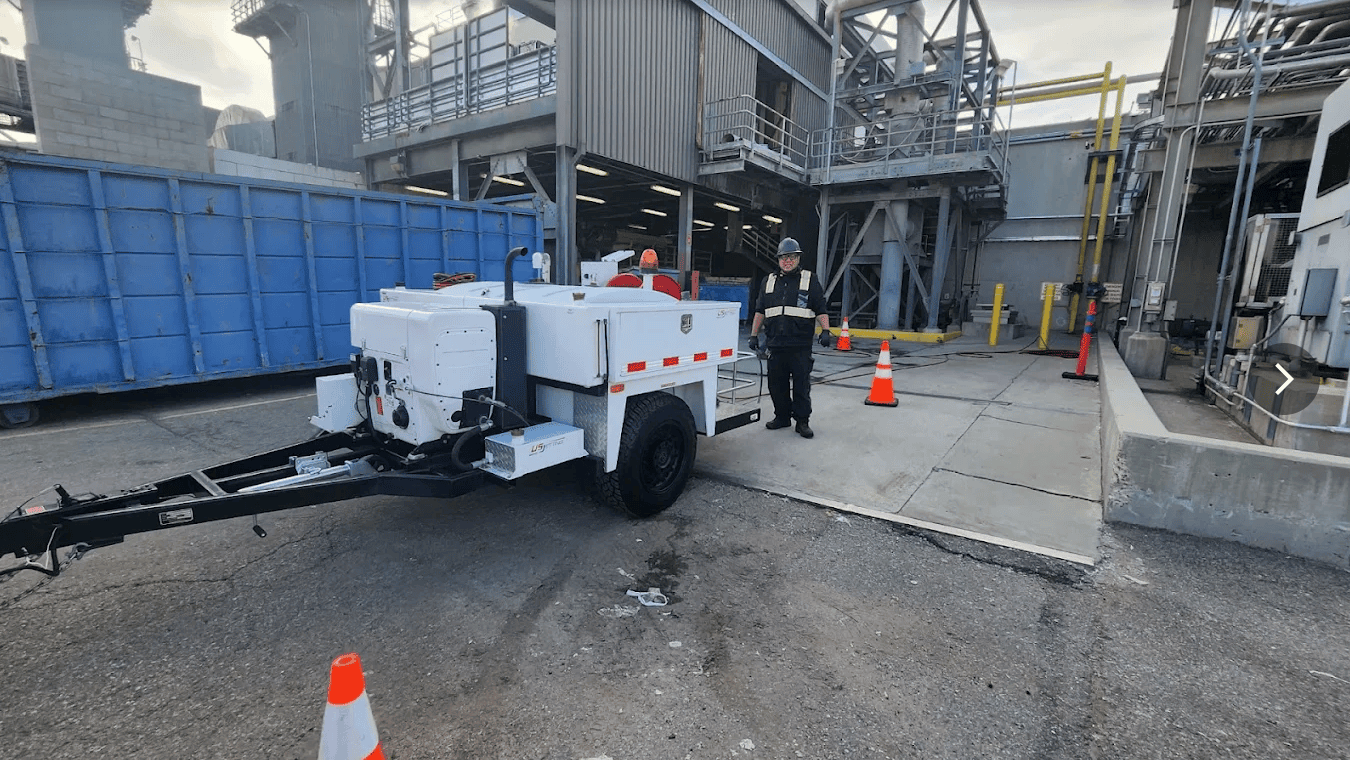 Jetter on an industrial job
What a jetter does inside the pipe
A jetter pushes water through a long hose to a nozzle on the end. The nozzle has small openings that point backward and out to the sides. Those jets pull the head up the line and blast the full wall of the pipe as it goes, so grease, sludge, scale, and small roots wash down the line instead of staying stuck to it.
A drain snake works another way. It bores a hole through the blockage, which gets water moving, but most of the buildup stays on the wall and the clog comes back. That difference is why jetting is the workhorse of our drain and sewer services.
More pressure is not always better. We set the pressure and nozzle to the pipe in front of us.
When a line needs jetting, not another snake
One slow sink is usually a simple clog. These are the patterns that tell us the buildup is spread along the pipe, or that something is growing into it.
The same drain clogs again a few weeks after it was cleared
The snake opened a path, but the grease or scale that caused it is still on the pipe wall.
Several drains are slow or gurgling at the same time
When more than one fixture backs up, the trouble is usually in the main line, not the fixtures.
A sewer smell near drains or the cleanout
Waste sitting in a partly blocked line gives off gas. Buildup that holds water is a common cause.
Grease keeps closing a kitchen line
Busy home kitchens and restaurants coat their lines with fat that hardens as it cools. Jetting scours it off.
Roots are in the line
A camera has shown roots, or there are big trees growing over the sewer lateral. Roots grow back unless they are cut out.
Water comes up in the lowest drain
A tub, shower, or floor drain filling with dirty water means the main line is blocked.
Call now, this one is urgentCamera first, jet second, camera again
On the day, the crew finds the cleanout, sets up the jetter beside it, and protects the work area. You do not need to leave the house, but we will ask you to hold off running water while the line is open.
If the camera finds a cracked, collapsed, or badly offset pipe, we do not jet it. High pressure through a broken section can make the damage worse. That line needs sewer line repair first, and we will show you why.
The nozzle decides what the water does
The jetter supplies the pressure. The head on the end of the hose decides where it goes. We pick it for the clog the camera found, and often change heads partway through a job.
Rotating nozzle
A spinning head sweeps the jets around the full pipe wall. It strips grease, sludge, and mineral scale and is the head we run on most kitchen lines and sewer mains.
Root cutter
A water-driven cutting head chews through roots where they come in at a joint. A second pass with a scouring head flushes the pieces down the line.
Penetrating nozzle
A strong forward jet punches through a line that is fully blocked so water can drain. Once it flows, we switch heads and clean the wall.
Older neighborhoods across Ventura and Santa Barbara Counties still have clay and cast iron sewer laterals. Clay joints are where roots get in, so the root cutter sees a lot of work. Hard water in much of Ventura County leaves scale inside cast iron and drain lines, which a rotating head clears. Near the coast, salt air and age wear cast iron faster, one more reason we look before we jet.
Same jetter, different jobs
A house and a restaurant clog for different reasons and on different timelines. Here is how the work changes between them.
Homes
ResidentialAt home we usually jet the main sewer line or a kitchen line that keeps clogging. Roots and grease are the usual causes. If only one sink is slow and it is the first time, basic drain cleaning may be all it needs, and we will say so.
Restaurants and commercial properties
CommercialCommercial kitchens, HOAs, and multi-unit buildings send far more grease and waste down the line. Jetting is often booked on a schedule, including grease trap line jetting, and timed around business hours.
Is jetting right for this line?
Answer four questions about your pipe. You will get our first read: camera first, jet it, or repair first. It is a starting point, and the camera has the final say.
Pick one answer in each row. If you are not sure about the pipe, that is normal. Most people are not, and the camera settles it.
Questions we hear about jetting
Straight answers to what people ask before we run a jetter on their line.
For most pipe in decent shape, yes. That is why we run a camera before any hydro jetting. If the line is badly corroded, cracked, or made of a fragile material, we lower the pressure, switch to a gentler method, or tell you it needs repair first.
Yes. A root cutting head and high-pressure water cut roots off at the joints and flush them down the line. Roots got in through a gap, though, so we camera the line afterward to show you where they entered and whether that joint needs a repair to keep them out.
It depends on what clogged it. A line coated by a busy kitchen builds up again faster than a home line that had a one-time root problem. Once we have seen the pipe, we will tell you whether a regular jetting schedule makes sense or whether you can just call when you need us.
Drain cleaning with a cable opens a single clog and is often all a slow sink needs. Hydro jetting scours the whole pipe wall, so it is the better fix for grease, roots, scale, or a clog that keeps coming back.
Yes. We jet kitchen lines, sewer mains, and storm lines for restaurants, HOAs, and commercial properties across Ventura and Santa Barbara Counties. Grease-heavy kitchens often book jetting for their grease lines on a regular schedule.
Tired of clearing the same line?
Call and tell us what the drain is doing and where. We will tell you whether it sounds like jetting, a camera run, or a simpler fix, and you get the price before any work starts.